A wind-down routine that actually works
The last hour decides more of the night than any gadget. Light, timing, temperature, and a repeatable sequence your body learns to trust.
Sleep does not have an off switch. It has a descent, and the descent starts well before the light does anything. The last hour of the evening is when the body decides what kind of night it is about to run, which makes that hour the cheapest place in the whole day to improve a night.
A wind-down routine is just that hour, designed once and repeated. Here is what the design has to respect, and a realistic version of it.
Why does the last hour matter so much?
Two systems are deciding together, and both read the evening for cues.
The body clock watches light. Bright light late, especially up close, reads as afternoon and delays the internal wind-down signal, so the night starts later and shallower than planned. Dim, warm light reads as dusk and lets the signal through.
The arousal system watches pace. A mind still sorting inboxes and arguments at 11 pm carries that activation into bed, and activated bodies sleep lighter. Arousal falls on a slope rather than a cliff, which is exactly why the hour needs to be a descent and why the same routine, repeated nightly, becomes a cue in itself. Bodies are pattern learners. Hand yours the same 3 or 4 steps every night and the steps start meaning sleep is next.
What does a realistic wind-down look like?
Something like this, tuned to taste. About an hour out, the day’s screens dim or shrink: brightness down, phone farther from the face, nothing agitating. Overhead lights give way to lamps. A warm shower or bath earns its folklore here, and published research agrees that one taken an hour or 2 before bed shortens the time to fall asleep; the body cools afterward, and falling core temperature is one of the signals sleep rides in on.
Then a quiet closing act, the same one most nights. Paper pages, stretching, tomorrow’s list written down so the mind can put it down, a slow tidy of the kitchen. The content matters less than the consistency, and enjoyability is what makes consistency survivable.
What the hour should exclude is as short a list: bright light, work, arguments, doomscrolling, and the late drink whose costs are itemized in evenings that lead to quieter nights.
Does a consistent bedtime really beat everything else?
It is the closest thing this subject has to a single keystone habit.
Bed and wake times that hold within about the same hour keep the body clock aimed, and an aimed clock deepens nights on its own: sleep comes faster, holds together better, and the deep stages land where they should. Researchers who study sleep regularity keep finding that consistency rivals duration in how strongly it tracks with feeling rested.
The common failure is the weekend, where bedtime drifts 2 hours and Monday inherits a small jet lag without a flight. Keeping the drift inside an hour, most of the time, is the whole discipline, and it costs nothing except deciding.
Consistency also happens to be what makes your data readable. A steady schedule gives your baseline a stable floor, so when the trend moves, the move means something.
What about caffeine, dinner, and exercise?
Three timing rules cover the daytime side.
Caffeine keeps working for up to 8 hours after the cup, so an early-afternoon last coffee protects the night from a distance. Dinner does better earlier and lighter, since a big meal near bedtime sits high and makes night breathing less easy. Exercise is a genuine friend of sleep at almost any hour; only the hard, late, competitive kind pushes some people’s nights later, and 2 weeks of trend will tell you if you are one of them.
Alcohol gets no timing rule here because it already has a whole section elsewhere: the short version is that the closer the last drink sits to bedtime, the more of the night it thins.
How should the bedroom be set up?
Cool, dark, quiet, and slightly humid in winter.
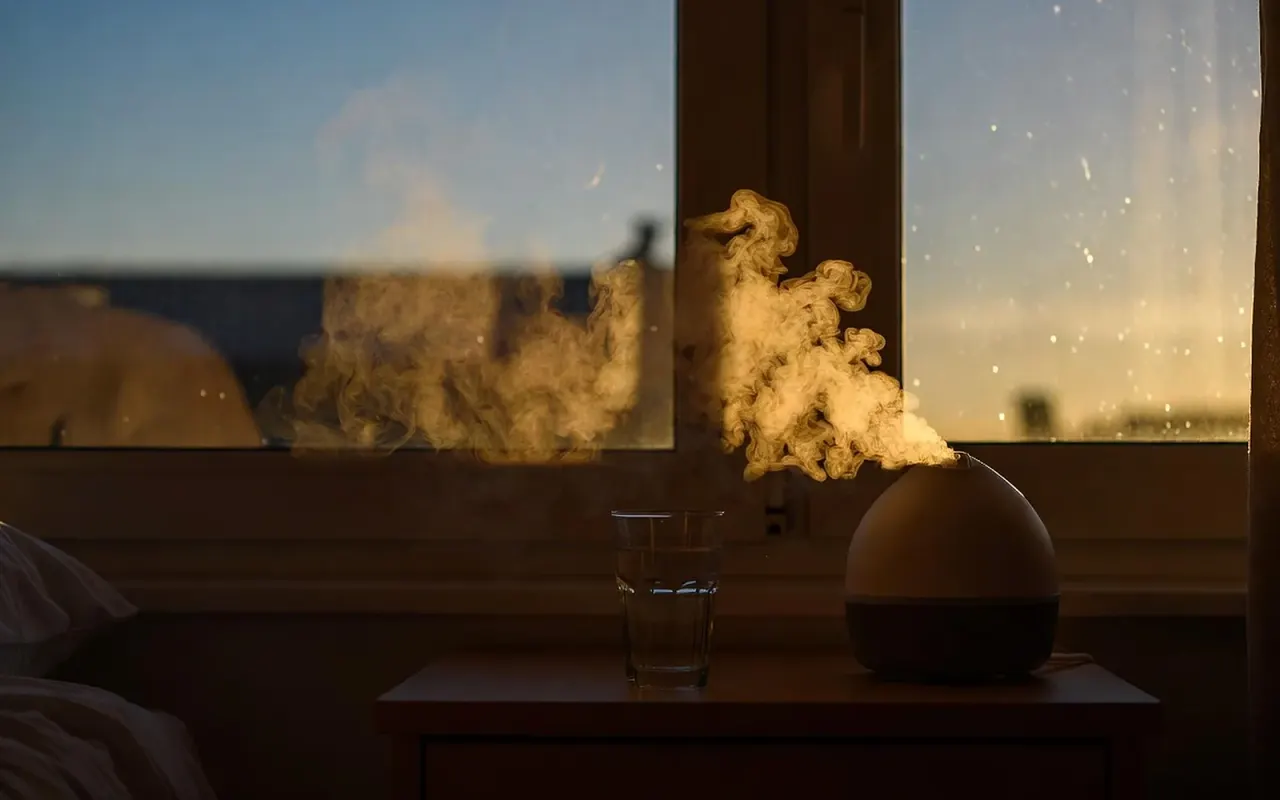
Cool means most people sleep best somewhere around 65 to 68 degrees Fahrenheit, cooler than daytime comfort, because the falling-temperature signal works in the room too. Dark means dark: streetlight and standby LEDs are small but real. Quiet is self-explanatory, with steady background sound like a fan being fine for people who prefer it. And dry heated air irritates the airway lining, so a clean cool-mist humidifier holding 30 to 50 percent humidity keeps winter nights kinder to the intake the whole night breathes through.
One more setup rule, older than any device: the bed is for sleep. The more waking life happens elsewhere, the faster the bed itself becomes a cue.
How do you know your routine is working?
The same honest way as any change: hold it for 2 weeks and read the averages against your own recent past, remembering that one night is never the story and that the first nights of any new arrangement describe the adjustment more than the arrangement.
Look for faster settling, steadier nights, and mornings that feel less negotiated. The audible side, fewer loud minutes and a steadier breathing rhythm, shows up in the same trend. If 2 honest weeks move nothing, change 1 element and run it again. A wind-down is an experiment you get to enjoy running, which is more than most experiments can say.
Further reading
Questions people ask
How long before bed should screens go off?
The last 30 to 60 minutes is the practical target, and dimness matters as much as distance. If the screen stays, turn the brightness down, hold it farther away, and pick something calm. Bright light up close is the real signal-jammer.
Is reading in bed a good idea?
For most people, yes, and it makes a fine final step of a wind-down. Paper or a dim, warm-toned reader works best. If you regularly lose an hour to it, move the reading to a chair and keep the bed for sleep.
What should you do when sleep will not come?
After about 20 minutes of lying awake, get up. Keep the lights dim, do something genuinely boring, and come back when your eyes are heavy. Staying in bed awake teaches the bed the wrong lesson, and the get-up-and-return move is standard sleep-education advice for a reason.
Does everyone need the same wind-down?
No. The principles hold for everyone, dim light, falling arousal, a consistent sequence, but the contents are personal. Build one you actually enjoy, hold it for 2 weeks, and let your own trend tell you whether it earned its place.